Showing posts with label existentialism Christianity religion philosophy. Show all posts

Friday, March 13, 2009

Can't Think of What to Write, So I'll Let Them do it:

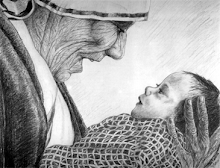
"The thing I have to work on in myself is this issue of belief. Gandhi believed Jesus when He said to turn the other cheek. Gandhi brought down the British Empire, deeply injured the caste system, and changed the world. Mother Teresa believed Jesus when He said everybody was priceless, even the ugly ones, the smelly ones, and Mother Theresa changed the world by showing them that a human being can be selfless. Peter finally believed the gospel after he got yelled at by Paul. Peter and Paul changed the world by starting small churches in godless towns." – Don Miller

"I mean that to be in a relationship with God is to be loved purely and furiously. And a person who thinks himself unlovable cannot be in a relationship with God because he can't accept who God is; a Being that is love. We learn that we are lovable or unlovable from other people. That is why God tells us so many times to love each other." – Don Miller

"The church has been preoccupied with the question, "What happens to your soul after you die?" As if the reason for Jesus coming can be summed up in, "Jesus is trying to help get more souls into heaven, as opposed to hell, after they die." I just think a fair reading of the Gospels blows that out of the water. I don't think that the entire message and life of Jesus can be boiled down to that bottom line." – Brian McLaren

"My goal is to destroy Christianity as a world religion and be a recatalyst for the movement of Jesus Christ," –Erwin McManus

“I think it is worth saying again that theology is not the same as the story of God. Far too often, in my opinion, this becomes an issue, and when one disagrees with our theology, we can too easily assume they have abandoned Scripture or the story of God. Theology is explanatory - answering certain questions or addressing certain issues. But it must never be confused with the life of God or the story of God” – Doug Pagitt

"Too much debate about scriptural authority has had the form of people hitting one another with locked suitcases. It is time to unpack our shorthand doctrines, to lay them out and inspect them. Long years in a suitcase may have made some of the contents go moldy. They will benefit from fresh air, and perhaps a hot iron." – N.T. Wright

This is probably my favorite of the group:

"The point of following Jesus isn’t simply so that we can be sure of going to a better place than this after we die. Our future beyond death is enormously important, but the nature of the Christian hope is such that it plays back into the present life. We’re called, here and now, to be instruments of God’s new creation, the world-put-to-rights, which has already been launched in Jesus and of which Jesus’ followers are supposed to be not simply beneficiaries but also agents." – N.T. Wright

Friday, February 20, 2009

What I Wish I Had Blogged About

So I’ve been on a blogging hiatus, but I am not making a real attempt to get back to it, so the two of you who read this will have that to look forward to. There have been a number of things that I would have liked to comment on here on my online podium, but I know that I will never give them each the treatment they deserve. Never-the-less, Here are the top 5 things I wish I would have blogged on (and a summary of what I would have said). In no particular order:

1. Jatropha. Heard of it? Me either! At least not until recently. But it seems to be worth hearing about. Jatropha is a neat little plant (actually, there are several varieties) who’s nuts produce an oil that can be used as fuel. Three reasons why this is a big deal: 1. It burns clean. Unlike our terrorist-provided oil it doesn’t pollute as it is used. 2. It comes from Latin America and the Caribbean. They grow it in India too, I think. The double bonus here is that these shamefully destitute places may have found a way to make some money, while our frenemies in OPEC will be losing some. 3. Unlike ethanol, cultivating jatropha won’t drive up food prices because you can’t eat it, so there is no competition.

2. Chimps Should Live in Trees. More to the point, they shouldn’t live in houses. And they shouldn’t share your bed or drink wine with you because THEY GO NUTS AND PEOPLE GET HURT. As a general rule, I’m not a fan of animals in cages (and a house constitutes a cage for a chimp. For that matter, so does almost every exhibit at the zoo, including the Portland zoo and most especially the Boise zoo). Now, to be fair, I have had “caged” pets before. My tarantula, for instance. But he (or she, I never asked) lived in a 65 gallon aquarium. I’ve had pet rats, and their cage was two stories and almost as big as my bed. The point is, if you cage any creature, or treat it as anything other than the creature it is (a chimp is not a human, for instance), bad things happen.

3. Ted Haggard is an Insurance Salesman. This honestly makes me very sad. I’ve never thought of myself as having a whole lot in common with Haggard (even less now), but as president of the NEA he was one of the family, you know? Granted, he was dishonest and immoral and absolutely should have been removed from his position as president and as pastor of New Life Church, but even then he should have been able to turn to the church for help. Instead, they literally kick him out of Colorado (they later changed their minds on that one). Look, guys, Jesus was not very image-conscious, so get over yourself and help the guy out. And Ted, don’t ever think about preaching again.

4. Christian Bale is a Jerk! You have probably heard by now about his little tirade on the set of the new Terminator movie (unrelated note: Really? Another one?). He threw a temper tantrum like a little girl and humiliated an employee on the set. Apparently he believes he really is as special as our celebrity-worshipping society has told him he is. Assistant Director and Associate Producer Bruce Franklin is defending him though, saying he was interrupted during a very emotional scene (in a Terminator movie?). Sounds like Bruce is hoping Christian will want to work with him in later movies. Not likely Bruce. The whole thing kind of reminds me of Alec Baldwin’s verbal abuse of his daughter in which he called her a pig (amongst other things) in a phone message. Celebrities really are different from us.

5. Obama Opposes Reinstituting the Fairness Doctrine. Good on you, Mr. President. You are now entitled to a tirade because you are special. The Fairness Doctrine was adopted in 1949 and held that broadcasters were obligated to provide opposing points of views on controversial issues of national importance. It was halted under the Reagan administration. What it comes down to is that at the very least it gives whiners a chance to whine and at its worst it provides a legal way to force others to support your point of view. Maybe I’ll send Obama a thank you note and few suggestions for some other ways to really wow the public is his first 100 days. Oh hell, I’ll just run for president in 2016.

One last thing….we’ve bailed out big business (i.e. gave them those bonuses they SO deserved), we’ve bailed out the car makers, we’ve bailed out those banks who can’t be bothered by people such as myself, and now we’re bailing out homeowners who shouldn’t have bought the house in the first place because you couldn’t afford it. Where’s my bail out?

Tuesday, July 8, 2008

Blog 2: Messianic Existentialist (part 2)

Here is the second part of my long-winded explanation of my personal philosophy of messianic existentialism.

The third ultimate concern is freedom. We are intentionally designed as free moral agents with the ability to think through what is right and what is wrong and the capacity to choose one or the other. To put it a simpler way, we have been granted free-will. The extent of this free-will is a subject of much debate; I don’t think that to assert that I am a free moral agent in anyway compromises the sovereignty of God. Let us state this, for the record: Nothing happens that God is not aware of, nothing surprises him. He either causes it to happen or he allows it to happen and everything that does happen he can use to carry out his ultimate plans, which can not be frustrated. Therefore, God is sovereign.
Now that we have established that we can return to the issue of freedom. Having been granted free-will and the capacity to choose also endows us with the responsibility of the consequences of our choices, and this, when really thought out and contemplated, is daunting. I frequently hear the phrase (and I confess often use the phrase) “I have to…”, as if I have no choice in doing whatever it is I am saying that I have to do. “I have to go to work in the morning…I have to go to the store…I have to go to bed at such and such time…I have to have my coffee in the morning…I have to smoke this cigarette…I have to have my pills…” and so on and so on. My answer to ANY “have to” is “no, you don’t.” I readily confess that there are consequences for every choice, perhaps unpleasant consequences, but the unpleasantness of the consequence does not mitigate the presence of the choice.
It is a tendency in our society, or perhaps just our nature, to seek excuses for what we or others do because we can not handle the idea that they actually chose to do whatever horrible thing it is they did. When a woman returns to a batterer we say that she has a syndrome and she can’t help but to return. When a young man abuses a younger girl we look at the abuse in his past and that that is why he did it. When a city riots we say that it is because they are oppressed and discriminated against. None of these answers are wrong, but in the end, there was always a choice to be made.
Closer to home, that means that when I am mean to my wife or yell at my child or ignore my work or eat poorly or don’t get some chore done, despite the many excuses and explanations I may have, these were all things I chose. The responsibility for my actions (or lack thereof) is mine and mine alone. One way humans have come up with to combat this horrible feeling of responsibility (other than clever excuses) is to live under rules and laws. This isn’t necessarily a bad thing either; clearly we are creatures in need of some guidance. But where the law increases guilt also increases with it and it is but another chain to burden us.
But then, Jesus. The Messiah does not remove our choice nor the consequences of our choices, but he does offer us a way to face them. First, he sets us only under one law, the law of love. We are to love God and love others; that will look differently for different people, but so long as we are acting in love (towards God and others) we are acting rightly. Second, he offers forgiveness. Indeed, the consequences for our choices go well beyond what we see and experience in this life and have effects on us for eternity. The ultimate consequence for our poor choices (or sin-whatever misses the mark of God) is death. Jesus took our place on the cross, taking our death and served as a propitiation, turning away the wrath of God and reconciling me, just as I am, to my creator. Thus I am no longer afraid of freedom. While I still must face certain consequences for poor choices I know that in his sovereignty God will make all things right and new and that in the end I will be ok-that is to say, I have been and am being saved; this is a tremendous burden removed from my soul.
The final ultimate concern is death. In addressing this I could just refer to all that has been stated already and that would cover much of it, but alas it would not satisfy my desire to write about it. So…..the fear of death and the instinct to try to survive is present in all creatures. For example, how long can you hold your breath? Let’s say for the purpose of this illustration that you can hold your breath for 30 seconds. By around second number 25 or so you are feeling a bit uncomfortable, your lungs may even be starting to hurt a bit, but in just 5 more seconds you get to breathe. Now imagine that you are forced suddenly to hold your breath. This lasts for 30 seconds, but you don’t know that. You have no idea how long it is going to last. Probably in this scenario by about second 5 you are already in pain. By second 10 or so you are panicking. By second 25 you are convinced you are going to die and are starting to give up hope. Second 31 is the greatest moment of your life because you are breathing again. We fear death.
We fear the unknown, and death is the greatest unknown there is. We fear what may be waiting for us, or not waiting for us. But Jesus tells us what is waiting for us. We know that the one who has trusted in Christ is saved from death, that when he dies he will be with Christ in Paradise and we know that the one who has not accepted the invitation will find himself in that place called Hades; so the unknown is removed. We know that there is nothing to fear for those that are saved, that they go to a place where there are no more tears. And, we know that death is not permanent. Christ has shown this by what he said and by the fact that he beat death. The resurrection began with Christ himself and will continue until all people are raised and receive their final rewards or condemnation. This is what we who like big words call inaugurated eschatology. The final stage has begun, but it is yet to finish. And so death has lost its sting for it is defeated; it is but a moment but eternal life is, well, eternal.
The ultimate concerns of the human condition: meaninglessness, isolation, freedom, and death, are all resolved and being resolved by the messiah. Because Yahweh is rapt with meaning and purpose, so too am I who am made in his image.

Blog #1 What Do You Mean Messianic Existentialist (part 1)

I Googled the term “messianic existentialist” today and I found exactly two items on the search, both of which were things I created. If you Google the term “Christian existentialist” you find considerably more entries, none of which quite capture what I mean when I describe myself as a messianic existentialist. So, for my first post, let me tell you what I mean by the term; hopefully I will be able to do so without contradicting what I said in those other two items I mentioned.
Let’s start with the existential side of things. Existential philosophy recognizes four ultimate concerns in life: meaninglessness, isolation, freedom, and death (Yalom, 1980). These come as no surprise if we consider the human condition as one of constantly searching for meaning and purpose. I really believe this to be true of all people, even the stupidest, most shallow of us is still searching for meaning and purpose, just in horrible, stupid, shallow ways. The impetus behind this search is the image of God inside of us-his touch, his breath, the echo of his original intentions for us in our design that remains inside us all calls to us and compels us to seek this image and the one behind it. Our nature is fallen, however, and thus we are unable to ever fully realize the imago dei, especially when left to our own devices to search for it (I know the fallen nature has many other consequences as well, but we are not addressing those here).
Now back to the ultimate concerns. Again, these are all byproducts of the intersection of our nature and the image of God inside us. A non-theistic take on existentialism holds that life is essentially meaningless and that we as human beings must struggle with this meaninglessness and somehow come to terms with it. Sounds pretty hopeless, but it’s not fully wrong. Consider how long your life is in comparison to time in general, the whole of our existence, with all its passion and desire, its joy and sadness, its moments of fear and courage and embarrassment and happiness and love, all of it is but a spec of time, a brief instant along the continuum of existence. And the fact of the matter is most of what you do simply will not matter in the long run. This is true even within our short lives. Most if not all of the issues and events that were so life-altering to me in my childhood are of no consequence now. How can I expect anything I do to be of consequence to anyone else in this life, much less in the years to come after me, if it can not even matter to me in my own time? I save a life-they still die eventually. I help a man break an addiction to drugs-he becomes addicted to alcohol. I teach the truth-they believe a lie. So much is meaningless in this life.
But then there’s Jesus. Here is a peculiar belief: I believe that about 2000 years ago in the Middle East a man was born. He was not born in the natural way, however. His mother was a virgin when he was born. Peculiar. I believe that that boy grew into a man and followed the law of God perfectly, where no other human being in history ever could or ever would. Peculiar. I believe that that same man taught truth-not truth that is “true for me”, but truth, THE truth. I believe that he was an innocent man and in many respects an insignificant carpenter who managed to scare those in power so much that they decided they had to kill him. Peculiar. I believe that when he died the whole relationship between God and man was changed forever. Peculiar. And I believe that he didn’t stay dead. I believe that he came back to life, got up, took the grave clothes off, and appeared to many. Peculiar. I believe that he rose into the air and is with God and will someday return. Very peculiar.
What Jesus left behind, besides a whole new way of relating to God (and that’s a pretty big deal) is a whole new way of life-life in the way of Jesus. Living life in the way of Jesus is a life that leads to revealing the imago dei; and this is the goal, the meaning, the purpose of life, to live fully in the life of God. I am not left to find meaning and purpose on my own (though I am welcome to shape my meaning and purpose with God) but I am shown meaning and given purpose by Jesus. What I think and say and do as I live life in the way of Jesus has eternal repercussions because the only one who is eternal grants them this honor-life is meaningless no more.
The second ultimate concern is isolation. By this the existentialist means that we never truly, fully know another human being and more to the point another human being can never fully, truly know me. No matter how well I express myself or how close we live in proximity to each other, even if you were to observe me all day long and I were to tell you my life story including every juicy secret there is, still you would not be able to experience life as me and therefore you can not fully know me. In one sense this is a bit of a relief, because I don’t want someone to know ALL my thoughts. But then again, we all struggle from time to time to be understood; sometimes it is all we want out of life-just someone to know us and understand us, but alas….
And then there is Jesus. He is the one who created me. He not only knows my thoughts but my intentions behind them (i.e. he knows my heart). And he knows my destiny. Yes, he knows everything about me, even the juicy little secrets. Moreover, the believer’s body is a temple of the Holy Spirit. He indwells and he knows-I am isolated no more. This is so much so that the Bible says that the Spirit Himself helps us to pray when we don’t know how or what to pray-He takes the groans of our heart and translates them for us. I am known.